On your all-inclusive holiday in Fuerteventura, you cannot miss a visit to the Jandia National Park, a large area of land in the south of the island, which occupies both windward and leeward sides and is the most virgin and wild part of Fuerteventura. In your experiences in Fuerteventura with our guide Pepo, you will have the possibility of visiting this area and enjoying its beaches, its mysterious history, its lighthouse and its people.
Fill out our form to make your vacation in Fuerteventura an unforgettable experience.
stops:
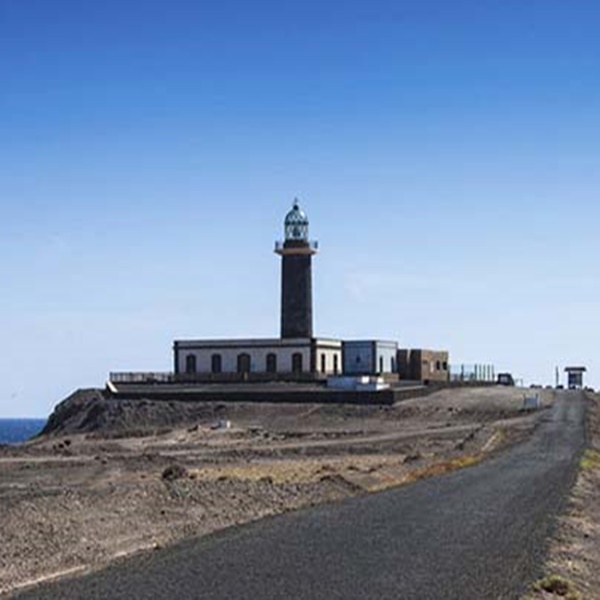
Punta de Jandía is the southernmost tip of the island, which extends across the plains of Los Tableros, forming the coastal terrace that lies west of the Nature Trail and the Mosquitos Valley. To get to the lighthouse you have to follow a dirt and unpaved track of about 20 kilometers, which runs along the southeastern coastal profile of the island. The route is dominated by small cliffs and some ravines. After barely passing a couple of kilometers from Puertito de la Cruz we find the Punta de Jandía Lighthouse.
Cofete Viewpoint
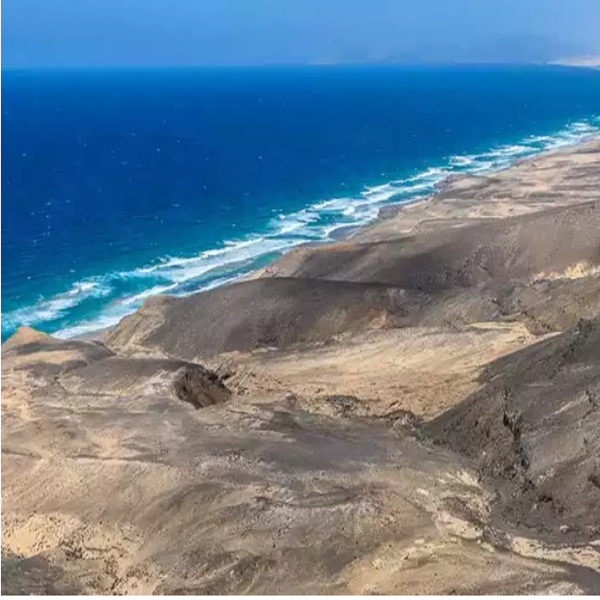
Mirador de Cofete, a natural viewpoint located on the Jandía peninsula, in the Jandía Natural Park, south of Fuerteventura. From this balcony with views to infinity, you can see a spectacular panoramic view of Cofete beach, considered one of the most virgin and wild in the Canary Islands.
Cofete Beach
Cofete Beach is perhaps the most spectacular beach in Fuerteventura with its 12 kilometers in length and its always strong waves that impress even from a viewpoint.
The Jandía Lighthouse
The Punta de Jandía lighthouse was erected at the southernmost end of the island during the second half of the 19th century. It began operating in 1864. The design was carried out by the young engineer Juan de León y Castillo. Its mission, at that time, was to guide the ships that were heading from Europe to the ports of Spanish and French West Africa, as well as the ships that made the route from the port of Las Palmas to Gran Tarajal and Puerto de Goats.
Its luminaire rises up to 33 meters above sea level, in a cylindrical tower. At its base is the keeper’s house, whose interior, currently closed, houses the Interpretation Center of the Jandía Natural Park and an exhibition on the seabed of the area and the cetaceans that inhabit them
La Casa Winter
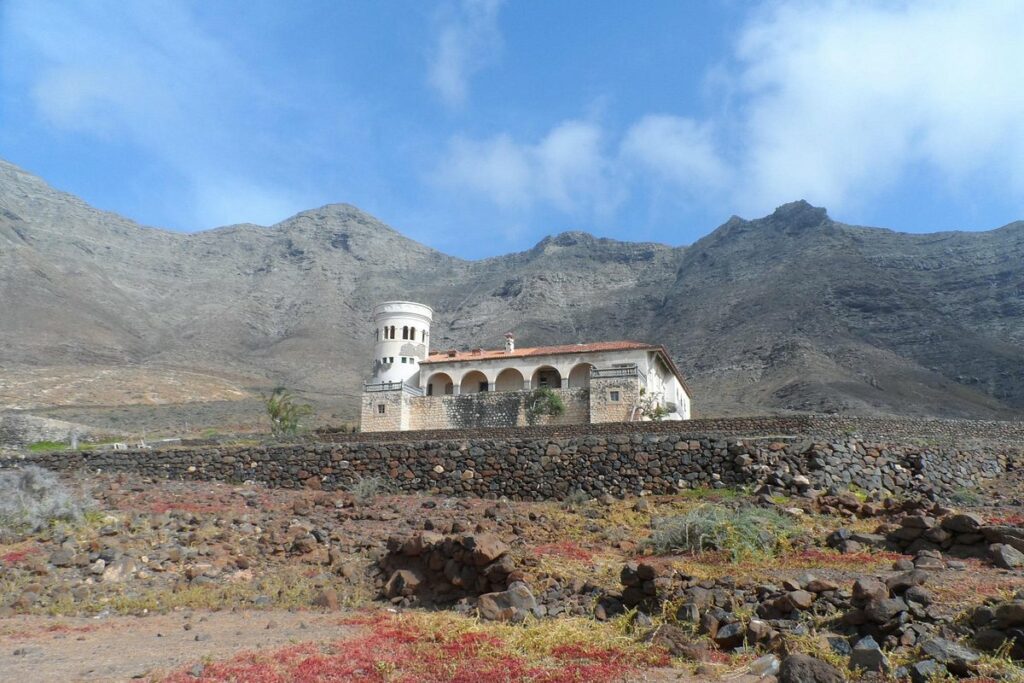
In the middle of the lonely natural area of Jandía, on the island of Fuerteventura, there is a large mansion called “Casa Winter”. It is a mysterious mansion located near Cofete, an old village located near the inaccessible Barlovento beach. The traditional way to get there was to cross the island’s desert mountains on foot or by camel for hours. Nowadays, the Winter House can also be accessed by car, although the visitor needs to muster up the courage behind the wheel to take the road, since the route soon stops being paved, turning into narrow dirt roads that border ravines and cliffs. buffeted by strong winds from the north, which makes the journey quite an adventure.
After a long journey, a large valley in the shape of a semi-crater opens up to the view, which houses in its center the impressive villa that stands out between the mountains and an extensive beach. The mansion, made of stone and concrete, has an impressive tower to its right with numerous windows that offer a 360-degree view of the landscape. Inside, the villa contains an interior patio surrounded by several rooms distributed over two floors, among which there is a large living room with an elegant fireplace and a balcony with beautiful views of the ocean.
Despite its age, the house contains luxurious details such as the decorations in its carpentry, and a wooden crocodile, which seems to watch attentively from the heights of the patio for the entry of intruders. At this point, the visitor wonders: “ «Who and why built a mansion like this in the middle of nowhere?»
Who is clear, the house was ordered to be built by the engineer Gustav Winter, a German who bought all the land on the Jandía peninsula. But as for “when” and “why,” there are several versions: the “official” version maintains that the house began to be built in 1946 and that it is simply a vacation residence for the wealthy engineer.
The other version claims that it was built during the Second World War with the consent of the Spanish dictator Francisco Franco, and that the works were subsidized by Hermann Göring himself, the second in command of the Third German Reich after Adolf Hitler.
It is said that the mansion is located just above some submerged natural caves that reach the sea, thus making it possible for submarines to reach it. Next, the Nazi troops used stairs located in the basements to access the Winter House, where they could stock up on food and fuel.
The stories explain that in addition, this chalet was a place where German officers could rest and relieve the tensions of the war, organizing long evenings in which there was no shortage of music, dancing, alcohol and prostitutes, all under the watchful eye of the portrait. of Hitler in the living room of the house.
But what is the true version? What is reality in everything written about the Cofete chalet?
The current inhabitant of Casa Winter, Pedro Fumero, is very clear: The version that the mansion was conceived as a simple vacation residence is not supported anywhere.
So Pedro began an investigation in 2012 to clarify the mysteries of the house, at the same time that he began to show its curiosities to visitors: secret rooms with tiny doors, a bunker in the basement, gloomy hallways that were walled up by someone. For this reason, a peculiar kitchen that is more reminiscent of a gloomy laboratory, nearby landing strips and remains of a powerful electrical installation, suggest that the Winter House was used for quite specific purposes.
In 2016, German-based engineer Darwin Vidal joined the research of Pedro Fumero. Together, and in close cooperation, they have collected extensive information for years from numerous archives around the world, revealing surprising data unknown to date.
The popular book “La Casa Winter” will soon be available in three languages: Spanish, English and German, showing definitive evidence about who Gustavo Winter really was.